Why Universal Reading Screeners Miss Your Most Struggling Readers
In the world of MTSS (Multi-Tiered System of Supports) and RTI (Response to Intervention), universal screeners are designed to act as our frontline early warning system—sounding the alarm before students fall behind. However, through our nationwide virtual work with school leadership teams, we see too many districts get trapped in a frustrating, reactive cycle.
Why?
Because they treat these high-level benchmarks like instructional roadmaps.
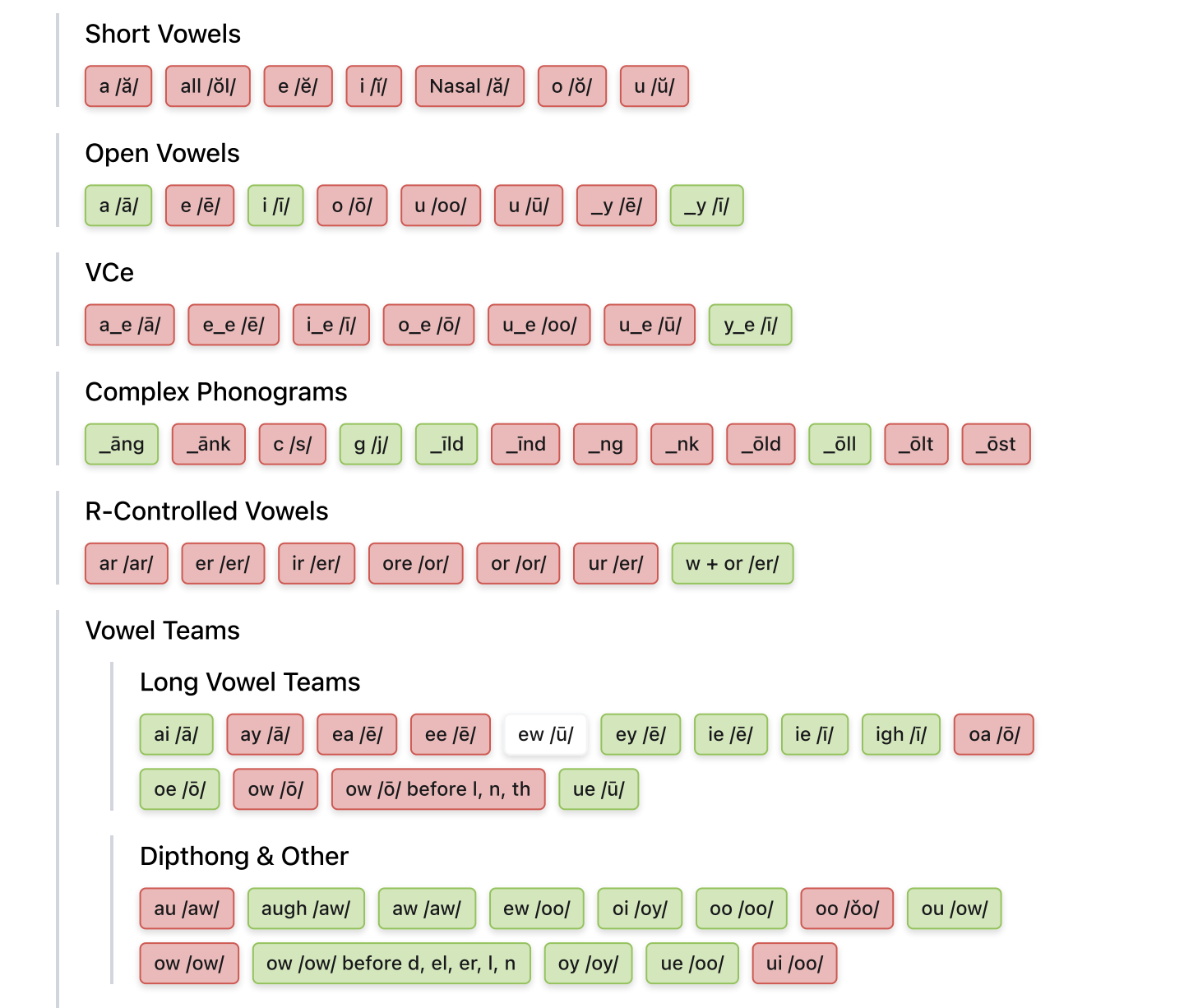
Image: Excerpt of a Root Compass Foundational Literacy Mastery Skill Report.
When we build intervention groups based purely on a screener’s surface-level data, instructional decisions become guesswork. Schools end up pouring valuable, finite resources into vocabulary and comprehension interventions for older students who look like they are struggling with "meaning," when they actually have severe, hidden deficits in foundational decoding—gaps that a comprehensive report like this one from Root Compass immediately brings to light.
The Great Masking Strategies
How do so many students struggle to read words yet make it to the upper grades completely undetected? Because they’re intelligent—they compensate.
For years, these bright students exploit a systemic loophole: the fact that foundational decoding skills are rarely screened past second grade. By relying heavily on background knowledge, strong visual memories, rich vocabularies, and contextual cues, they successfully mask the fact that they cannot accurately decode half the words on the page.
By middle or high school, however, they hit an invisible wall. Upper-grade texts introduce two massive hurdles simultaneously:
Unfamiliar Content: Topics become abstract and conceptual, meaning students can no longer rely on familiar background context to fill in the typographical blanks.
Morphological Complexity: Sentences become densely packed with unique, low-frequency multisyllabic words and affixes (such as intercoastal or antipathy).
When students can no longer memorize or guess their way through a sentence, their strategies collapses under the sheer cognitive load. Their comprehension plummets, leaving educators utterly baffled as to why a historically "good reader" is suddenly failing.
The Data Tells a Different Story
This isn’t an isolated phenomenon; it is a systemic reality. A massive study of 15,000 students by the Educational Testing Service (ETS) and AERDF’s Reading Reimagined initiative revealed the true scale of this hidden crisis:
40% of all students in grades 3–8 fall below the critical "decoding threshold."
50% to 70% of students reading below grade level are actually struggling with basic decoding and word-level fluency.
The reason this has turned into a crisis in grades 3–12 is a massive blindspot: advanced foundational skills are rarely screened or taught in upper grades. Once a student hits 3rd or 4th grade, schools largely stop checking for decoding altogether.
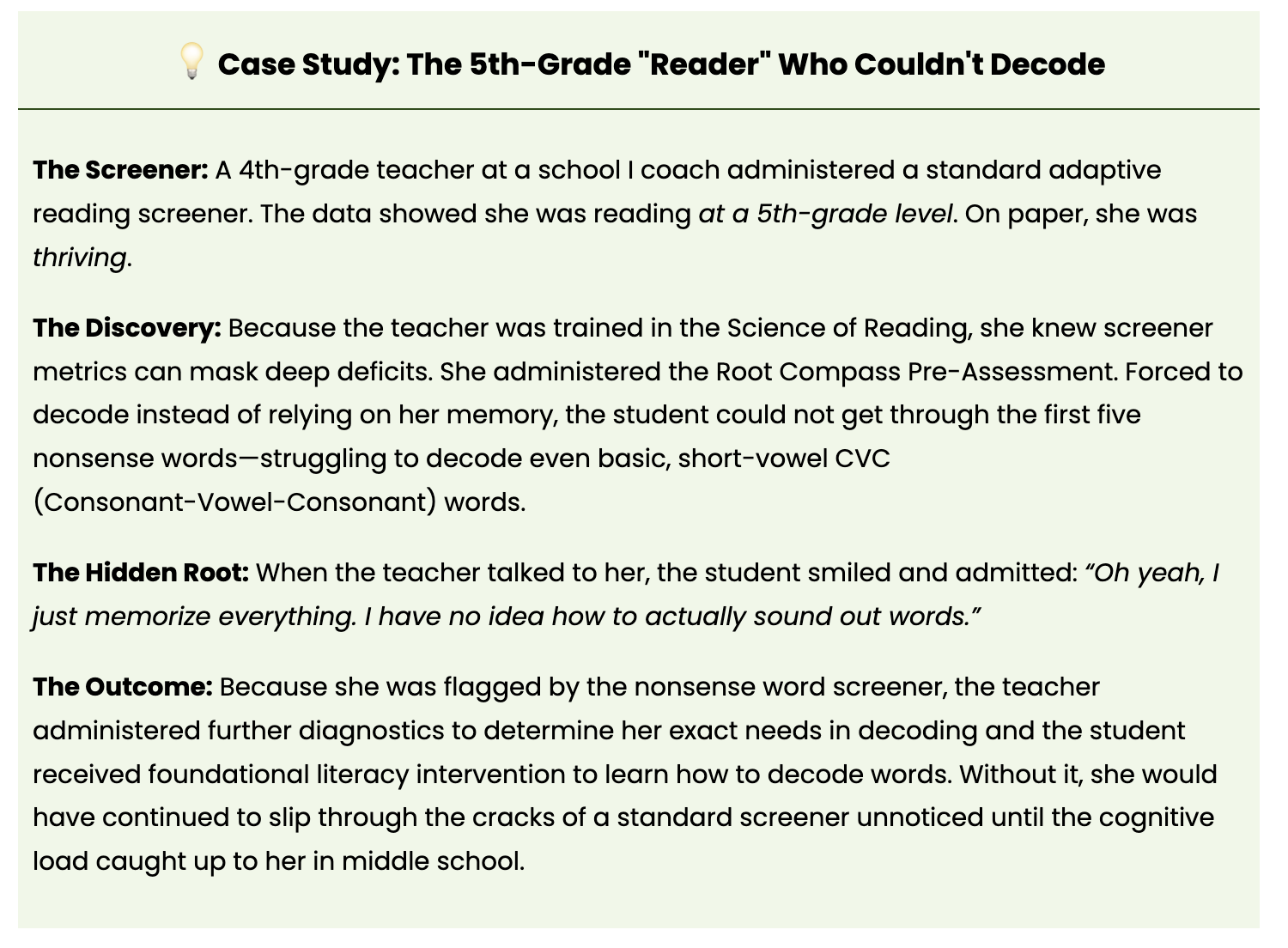
Unless we screen older students using nonsense words—where memory and context are completely useless—their true decoding deficits will remain entirely invisible.
Finding out that a historically "good reader" is actually guessing their way through text can feel overwhelming for any school leader. But recognizing that your universal screener has a diagnostic blindspot is the crucial first step.
To stop letting these clever compensators slip through the cracks, we have to shift our lens from high-level benchmarking to deep, clinical data. That’s exactly why we created Root Compass—so these hidden decoding deficits can finally be caught, and struggling students no longer go undetected.
Is Your Data Hiding Struggling Readers?
Finding out that a historically "good reader" is actually guessing their way through text is an "aha" moment for any school leader. But recognizing that your universal screener has a diagnostic blindspot is only the first step. To truly stop letting these clever compensator students slip through the cracks, we have to look past surface-level screening scores and redesign our data frameworks.
At Root Literacy Design, we help you unmask these hidden gaps by auditing your current assessment framework and mapping out precise, actionable flowchart for each grade level to ensure you catch every struggling reader.
What's Next?
Now that you know why screeners miss these students, how do you fix your data model to catch them? Let’s unpack the complete literacy ecosystem and dive into The 4 Types of Assessment Every School Needs.

Join the Root Literacy Design Community
We help educators implement evidence-based practices so all students learn to read and write.
Join our newsletter by filling out the simple form at the bottom of any page of our website to be the first to know about offerings, sales, and more. Together we can build a strong foundation for literacy success!
Until all of our students can read and write,
Heather Ballantine, Founder & CEO of Root Literacy Design LLC