Beyond Just Books: How to Build a Library that Builds Readers
To build a classroom library that truly supports evidence-based literacy, we need to understand the different purposes of various texts. The goal isn't just to have books available, but to ensure every student has access to two types of books: those they can read on their own, and those that build their knowledge and vocabulary when read aloud to them. Both are essential for creating a strong foundation for reading.
Regardless of your role—whether you’re a teacher, reading specialist, or even a parent—if you're helping a student learn to read, you need two distinct collections of books. Separating these into two different libraries helps students understand the purpose of each book.
1. The Decodable Text Library
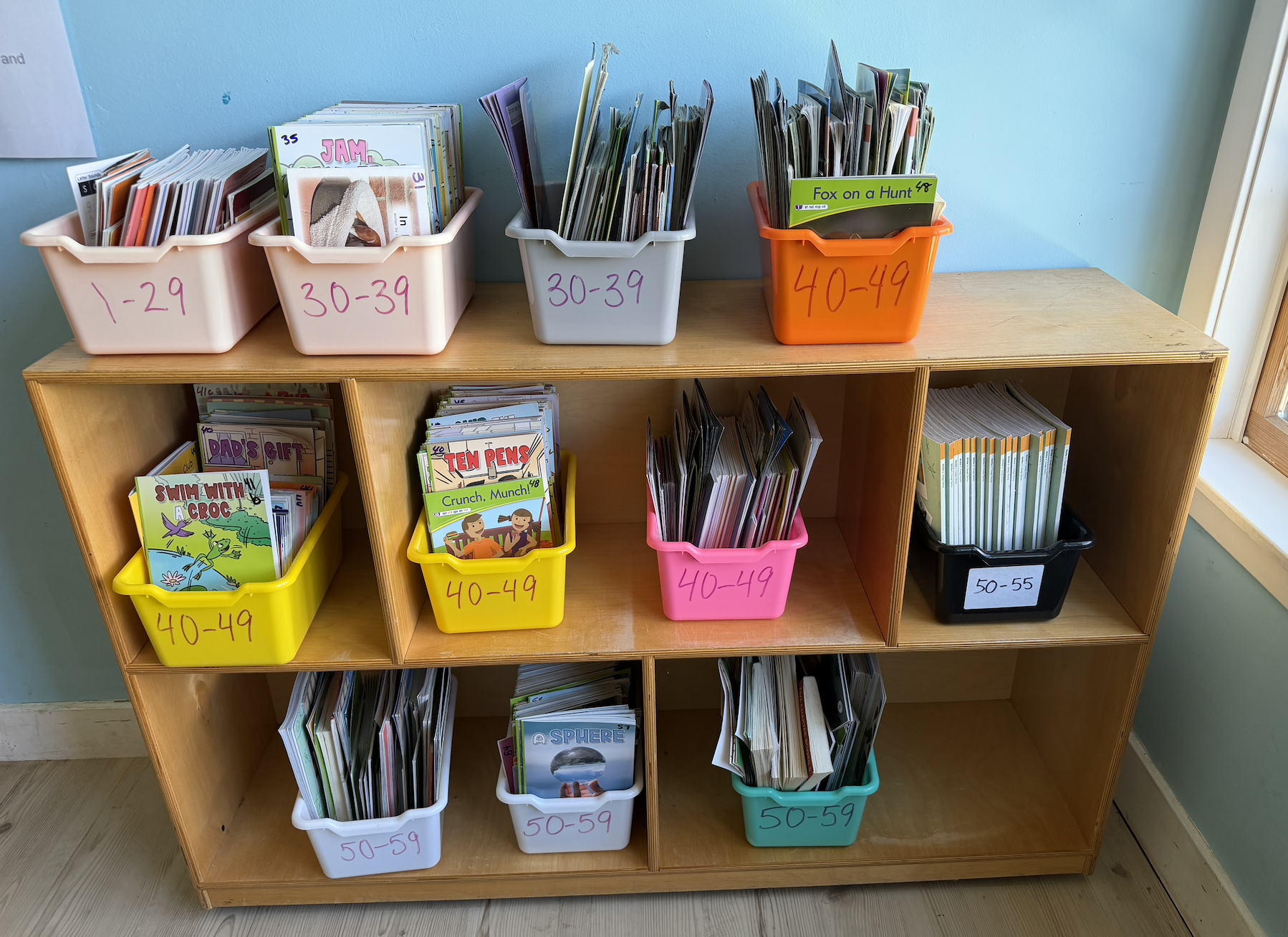
A decodable text library is a collection of decodable books that students read independently to practice specific foundational skills (like phonics, morphology, and spelling rules). These books are intentionally aligned with a foundational literacy scope and sequence, ensuring students can decode nearly every word. Their purpose is to help students apply the foundational reading skills they're learning, building both confidence and fluency. These are perfect for independent reading or small-group instruction where students can put their new decoding knowledge to the test.
Make sure the books are developmentally appropriate:
Resources like The Reading League’s decodable text guide are a great place to start to find decodables for students of all ages, K-12.
UFLI’s decodable text guide maps decodables right to their scope and sequence.
2. The Read-Aloud Library
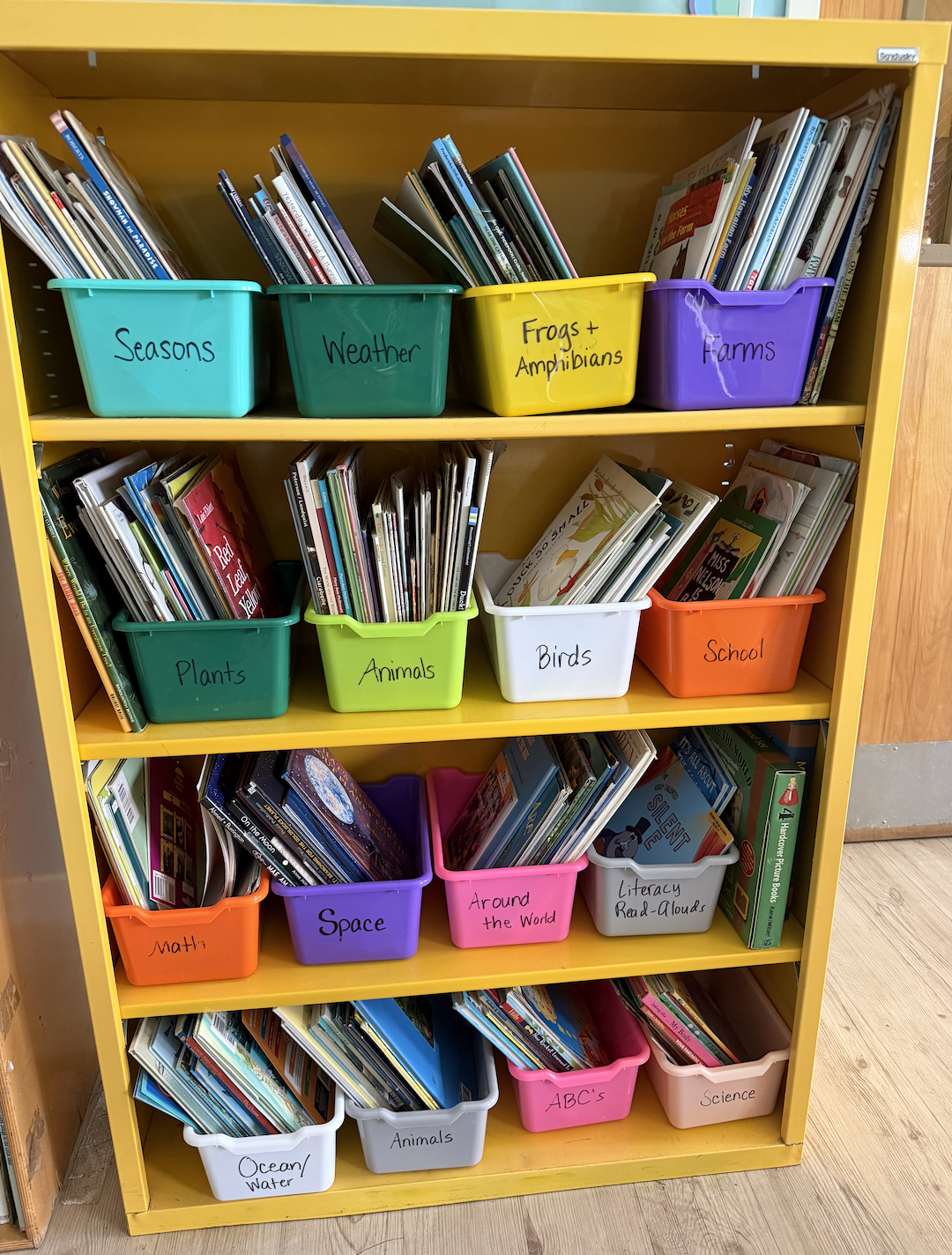
A read-aloud library is a curated collection of authentic books that you read to your students rather than books they read independently (you know—the ones you find on the shelves of your local bookstore or public library).
Carefully selected for their rich vocabulary, engaging narratives, and authentic multicultural perspectives, these narrative and expository titles extend beyond what early readers (regardless of age) can decode on their own. The primary goal is simple: help students learn about the world and foster a love for reading. By encountering rich, varied contexts, students absorb the complex oral vocabulary and background knowledge that directly drive future reading comprehension.
How to Organize: Sort your read-alouds by topic, theme, or author/genre (not by any type of “level”). Creating thematic bins—like Insects & Ecosystems, Global Celebrations, Inventions & Inventors, or Overcoming Adversity—allows you to pull a cluster of books that build deep, interconnected background knowledge on a single topic.
What to Look For: Resources like Colorin Colorado, Read Across America, Social Justice Books, and We Need Diverse Books are all great places to begin building your read-aloud library.
The 6 Text Types:
Want to dive deeper into text types? Watch the quick video walk-through as I break down the Text Types Guide step-by-step.
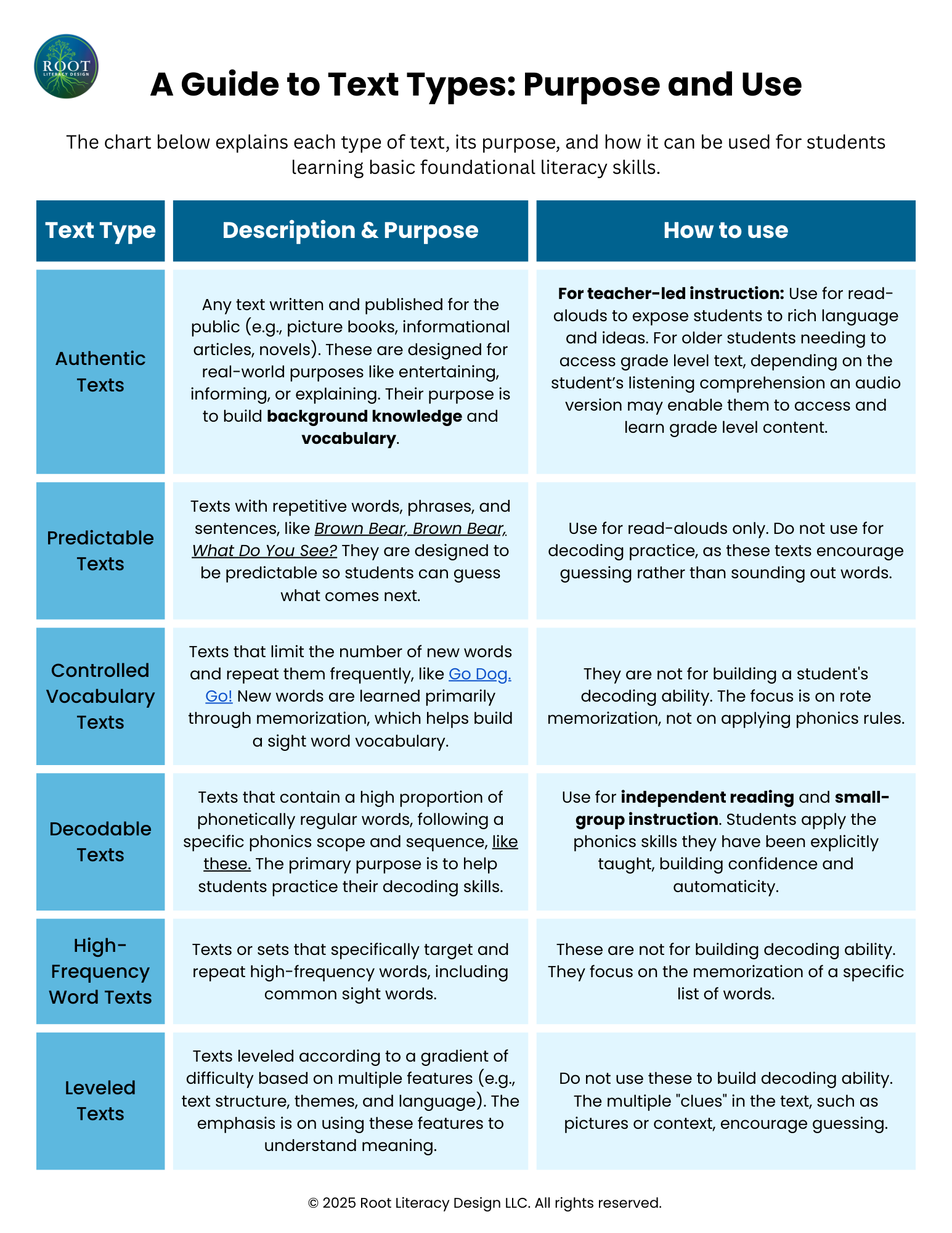
Grab this resource on our Free Tools page!

References
Reading Rockets. Retrieved 9/24/23 from https://www.readingrockets.org/classroom/choosing-and-using-classroom-texts/types-
texts-and-how-use-them
RIDE’s Decodable Text Project. Retrieved 12/8/2021 from: https://www.ride.ri.gov/Portals/0/Uploads/Documents/Instruction-and- Assessment- World-Class-Standards/Literacy/Decodable%20Text%20Project%20PowerPoint.pdf
Shanahan, T. (2019). Which Texts for Teaching Reading: Decodable, Predictable, or Controlled Vocabulary? Retrieved 12/8/2021 from https://www.readingrockets.org/blogs/shanahan-literacy/which-texts-teaching-reading-decodable- predictable-or-controlled-vocabulary
Somers-Arthur, J. What is “Authentic Text”? And why should I use it in my classroom. Retreived 12/13/2021 from https://www.fldoe.org/core/fileparse.php/7581/urlt/AuthenticText.pdf
Schwartz, S. (2020). “Decodable” Books: Boring, Useful, or Both? Retrieved 12/13/2021 from https://www.edweek.org/teaching-learning/decodable-books-boring-useful-or-both/2020/0
Related Articles
Join the Root Literacy Design Community
We help educators implement evidence-based practices so all students learn to read and write.
Join our newsletter by filling out the simple form at the bottom of any page of our website to be the first to know about offerings, sales, and more. Together we can build a strong foundation for literacy success!
Until all of our students can read and write,
Heather Ballantine, Founder & CVO of Root Literacy Design LLC